
Wood vs Resin Outdoor Sofa: Which Material Is Right for You?
Choosing between wood and resin can make or break your patio investment. Compare durability, weather resistance, comfort, cost, and long-term maintenance in one complete guide.
When you start shopping for an outdoor sofa, one of the first decisions you will face is the frame material. Wood and resin are two of the most popular choices, and each has passionate defenders. But the truth is that neither is universally better — the right answer depends on your climate, your budget, your maintenance tolerance, and how you actually use your outdoor space.
If you have already narrowed your search to these two materials, you are likely in the final research stage before buying. This guide will walk you through every practical difference between a wooden outdoor sofa and a resin model, so you can make a confident purchase decision without second-guessing yourself later.
Quick Verdict: Choose wood if you want natural beauty, timeless style, and are willing to maintain it. Choose resin if you want low maintenance, all-weather durability, and a lighter, budget-friendly frame that can mimic the look of wicker or wood.
Recommended Wood & Resin Outdoor Sofas
⚠️ AFFILIATE DISCLOSURE: This website contains affiliate links. As an affiliate Associate, we earn from qualifying purchases. If you make a purchase through these links, we may receive a small commission at no additional cost to you. Read our full affiliate policy.

Christopher Knight Home Teras Acacia Wood Outdoor 3 Seater Sofa with PE Wicker Armrest, Solid Wood Patio Sofa with Removable Cushion, Comfy Lounge Sofa for Patio Furniture Set, Light Teak+Beige
Check price on Amazon
Devoko Outdoor Couch Acacia Wood Outdoor Sofa Balcony Furniture (White) | Adjustable Armrests Outdoor Furniture, Convertible Patio Couch with Removable Cushions & Pillows for Patio, Porch, Poolside
Check price on Amazon
Signature Design by Ashley Clare View 1-Piece Eucalyptus Outdoor Sofa | Weather-Shielded 5-Step Eucalyptus Finish, Stain-Resistant Nuvella Fabric, Deep-Seated 3-Person Frame with 4 Accent Pillows
Check price on Amazon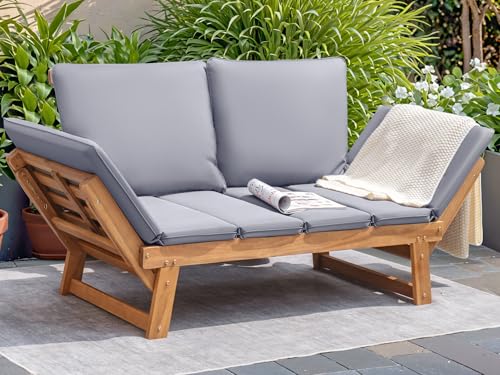
Devoko Outdoor Couch Acacia Wood Outdoor Sofa Balcony Furniture (Grey) | Adjustable Armrests Outdoor Loveseat, Convertible Patio Couch with Removable Cushions & Pillows for Patio, Porch, Poolside
Check price on Amazon
Christopher Knight Home Levi Acacia Wood Outdoor 3 Seater Sofa with Cushions, Mid-Century Modern Solid Wood Patio Sofa with Slatted Design, Comfy Lounge Sofa for Patio Furniture Set, Light Teak+Beige
Check price on Amazon
Christopher Knight Home Wicos Acacia Wood Outdoor 3-Seater Sofa with Cushion, Solid Wood Patio Sofa Couch with Armless Design, Outdoor Lounge Sofa Couch for Garden Backyard, Beige+Brown
Check price on Amazon
Merax Acacia Wood Outdoor Patio Loveseat Sofa w/Coushion and & Light Brown Rope, 3-Seater Sofa Daybed for Backyard, Lawn, Deck, Balcony, Water Repellent Fabric, 600 lbs Capacity, Teak +Beige
Check price on Amazon
Christopher Knight Home Sures Acacia Wood Outdoor 3 Seater Sofa with Cushion, Solid Wood Patio Sofa with Removable Cushion, Comfy Lounge Sofa for Patio Furniture Set, Natural+Olive Green
Check price on AmazonWhat Is a Wood Outdoor Sofa?
A wooden outdoor sofa is built with a solid wood frame — commonly teak, acacia, eucalyptus, or cedar. These woods contain natural oils and dense grains that help them resist moisture, insects, and warping. Teak in particular is considered the gold standard, which is why a teak outdoor sofa set commands a premium price.
Wood frames are usually finished with oil, varnish, or left untreated to develop a silver-gray patina over time. They pair beautifully with waterproof cushions and suit rustic, coastal, and traditional patio designs.
What Is a Resin Outdoor Sofa?
A resin outdoor sofa uses a frame made from high-density polyethylene (HDPE) or similar synthetic polymers. Resin is often woven to mimic the look of natural wicker, which is why you will see resin sofas marketed as plastic wicker sofas or all-weather rattan.
Resin is non-porous, so it does not absorb water, rot, or crack like untreated wood can. It is also significantly lighter than solid wood, making it easier to rearrange and move around your patio. Many resin frames are UV-treated to prevent fading, and they typically require nothing more than a quick wipe-down to stay clean.
Wood vs Resin Outdoor Sofa: Head-to-Head Comparison
The table below summarizes the key differences. Keep in mind that performance varies by specific product quality — not all wood and not all resin are created equal.
| Factor | Wood | Resin |
|---|---|---|
| Weather Resistance | Good to excellent (teak best); requires sealing or oiling | Excellent; inherently waterproof and UV-resistant |
| Maintenance | High; oil, seal, or refinish annually | Low; wipe clean with soap and water |
| Durability | 20+ years for teak if maintained | 10–15 years typical; can become brittle in extreme cold |
| Weight | Heavy; stays put in wind | Light; easy to move, may need anchoring in high wind |
| Aesthetic | Natural, warm, premium | Uniform, can mimic wicker or wood |
| Comfort | Firm; cushion-dependent | Firm; cushion-dependent |
| Cost | $800–$2,500+ | $400–$1,200 |
| Best For | Covered patios, mild climates, design-focused buyers | Exposed decks, humid or rainy climates, low-maintenance buyers |
Weather Resistance: How Each Material Handles the Elements
This is where the two materials diverge most sharply. Wood is hygroscopic, meaning it absorbs and releases moisture. Over time, this causes swelling, cracking, and warping if the wood is not properly sealed. Teak is the most resistant because of its natural oils, but even teak benefits from an annual application of moisture sealing to maintain its golden color and structural integrity.
Resin, by contrast, is non-porous. Water simply beads off the surface. This makes resin an outstanding choice for all-weather outdoor sofas in rainy or humid regions. It will not rot, and it does not need to be covered during a downpour. However, resin can become brittle in freezing temperatures, so if you live in a climate with harsh winters, you should still consider storing it or using a protective waterproof sofa cover.
Maintenance: The Real Long-Term Cost
Wood demands attention. Depending on your climate, you will need to clean, sand, and re-oil or re-seal your wood sofa every 6 to 12 months. If you skip this, the wood will gray, crack, and eventually weaken. For buyers who enjoy a bit of hands-on care, this is a rewarding ritual. For everyone else, it is a chore that can shorten the life of an expensive purchase.
Resin is the low-maintenance champion. A mild soap solution and a soft brush are usually enough to remove dirt, pollen, and bird droppings. There is no sealing, no sanding, and no refinishing. If you want a sofa you can enjoy without a seasonal to-do list, resin wins this category decisively. You can read more about keeping outdoor upholstery fresh in our outdoor sofa material care guide.
Durability and Lifespan
A well-maintained teak sofa can last 20 years or more and often becomes a family heirloom. Other woods like acacia and eucalyptus are less dense and may last 8 to 12 years with proper care. The key variable is maintenance — an ignored wood sofa will deteriorate far faster than a cared-for one.
Resin sofas typically last 10 to 15 years. High-quality HDPE resin resists fading and cracking far better than cheap plastic imitations. The main risks are UV degradation (if the resin is not UV-stabilized) and brittleness in extreme cold. If you choose a reputable brand and bring the sofa indoors or cover it during freezing months, resin can easily serve you for a decade or more.
Comfort and Cushion Compatibility
Both wood and resin frames are rigid, so comfort comes down to the cushions you pair with them. Wood frames often have wider, flatter arms that work well with thick outdoor sofa cushions. Resin frames, especially wicker-style ones, may have curved arms and backs that require cushions with specific shapes or cushion ties to stay in place.
Neither material is inherently more comfortable. What matters is the seat depth, cushion thickness, and foam quality. If you want a plusher feel, look for a sofa with a deeper seat and pair it with large outdoor sofa cushions. For a more streamlined look, a modern wicker outdoor sofa in resin with slim cushions can feel just as inviting.
Aesthetics: Natural Warmth vs Uniform Consistency
Wood brings warmth, grain variation, and a sense of craftsmanship that synthetic materials struggle to replicate. A teak set or an outdoor wood frame sofa feels grounded and organic. It ages gracefully, developing a patina that many homeowners find more beautiful than the original finish.
Resin, on the other hand, offers perfect consistency. Every strand of a resin wicker weave looks identical, which creates a clean, modern appearance. Resin can be dyed in colors that wood cannot naturally achieve, and it pairs well with white cushions or bold accent pillows. If you want a specific color palette, resin gives you more control.
Cost: What You Pay Upfront and Over Time
Wood sofas generally cost more upfront. A quality teak sofa typically ranges from $1,200 to $2,500 or more, while acacia and eucalyptus models fall in the $800 to $1,500 range. Resin sofas are more budget-friendly, typically ranging from $400 to $1,200 depending on size and cushion quality.
However, total cost of ownership matters. Wood requires ongoing spending on oil, sealant, and occasional professional refinishing. Resin requires almost none. Over a 10-year period, a resin sofa may actually cost less overall — unless you place high value on the natural beauty and longevity of wood. If you are shopping on a tighter budget, keep an eye on outdoor sofa sales and clearance events for both materials.
Pros and Cons at a Glance
Wood Outdoor Sofa
Pros:
- Natural, premium appearance
- Extremely long lifespan with care
- Sturdy and heavy — stays put in wind
- Repairable and refinishable
- Increases in character with age
Cons:
- Requires regular oiling or sealing
- Can crack, warp, or rot if neglected
- Higher upfront cost
- Heavy and difficult to move alone
Resin Outdoor Sofa
Pros:
- Virtually maintenance-free
- Excellent water and UV resistance
- Lightweight and easy to rearrange
- More affordable upfront
- Available in many colors and weaves
Cons:
- Can become brittle in extreme cold
- Shorter lifespan than well-kept teak
- Less natural look and feel
- May fade or crack with low-quality resin
Which One Should You Choose?
If your patio is covered or you live in a mild climate and you love the look of natural wood, a wooden sofa is a rewarding long-term investment. You will need to commit to seasonal maintenance, but the result is a piece that grows more beautiful with time.
If your outdoor space is fully exposed to sun and rain, or if you simply do not want to think about maintenance, a resin sofa is the smarter practical choice. It will handle the elements with minimal fuss and keep your patio looking tidy year-round. For a closer look at how resin compares to other synthetic options, see our guide on wicker outdoor sofa sets.
Still undecided? Consider a hybrid approach: a wood frame with resin wicker accents, or a resin sofa with a wood-look finish. Many manufacturers now blend materials to give you the best of both worlds. If you are also comparing frame metals, our outdoor metal sofa guide may help you rule out alternatives.
Frequently Asked Questions
Is resin as durable as wood for an outdoor sofa?
Resin is more resistant to moisture and requires less maintenance, but high-quality wood like teak can outlast resin if properly cared for. Resin typically lasts 10–15 years, while maintained teak can last 20+ years.
Does resin furniture get hot in the sun?
Yes, dark-colored resin can become warm to the touch in direct sunlight. Lighter colors and UV-stabilized resin tend to stay cooler. Adding cushions also reduces direct contact with the frame.
Can I leave a wood outdoor sofa outside in winter?
Teak can handle winter better than most woods, but all wood benefits from a protective cover or indoor storage during freezing temperatures. Moisture and freeze-thaw cycles are the main enemies of wood frames.
Is resin furniture environmentally friendly?
HDPE resin is recyclable, and many manufacturers use recycled plastic. However, it is still a petroleum-based product. Wood is renewable and biodegradable, though responsible sourcing matters. Both have trade-offs.
Which material is better for a humid climate?
Resin is generally better for humid climates because it does not absorb moisture. If you prefer wood in a humid area, choose teak and seal it regularly, or consider a all-weather outdoor sofa designed for tropical conditions.
Final Thoughts
Wood and resin both make excellent outdoor sofas — they simply serve different priorities. Wood appeals to buyers who value natural beauty and are willing to invest time in maintenance. Resin appeals to buyers who want durability, low upkeep, and a lower upfront cost. There is no wrong answer, only the answer that fits your lifestyle.
Before you buy, measure your space, decide how much maintenance you are realistically willing to do, and set a firm budget. Then explore our shopping and reviews hub for more comparisons, or browse our outdoor sofa purchase timeline to plan your buy at the right moment.